

A featured contribution from Leadership Perspectives: a curated forum reserved for leaders nominated by our subscribers and vetted by the Construction Tech Review Advisory Board.

Catholic Church Insurance
Successful Agile Adoption: Changing Culture, Not Process

Renee Geary
While industry leaders have embraced Agile and are today far more comfortable with embedding the framework into their business fabric, the transition has its challenges given the cultural and in particular, leadership mindset change required. The traditional leadership model in the context of Agile innovation works differently with leaders often struggling to transform Agile as a conceptual model to a business reality. Agile teams are self-governing and rely on a clear vision being conveyed to them coupled with the freedom to define how they will execute, in order to be successful. This requires far less senior leadership intervention than a traditional model, which results in the team’s ability to execute their activity swiftly and achieve the benefits sooner, both of which are key objectives for adopting an Agile model in the first place.
Upon embarking on an Agile transition, many leaders approach it with gusto and are eager to implement a framework that will yield high returns as early as possible.
In practice, the transition to Agile is a difficult one at best, and the cultural mindset and change management implications are paramount (Handscomb et al. 2019). Not only do the Agile ceremonies need to be adhered to along with other bottom up practices consistent with the Agile framework, but the change in the way senior management need to operate has a disproportionate influence on the culture of the organisation (Handscomb et al. 2019).To drive and realise the long term benefits of Agile, leaders must be willing to relinquish pre-existing ways of working.
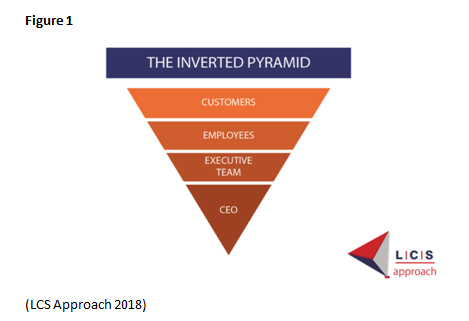
I was asked recently “when adopting Agile, what is the most difficult to change - people, process or technology?” Agile espouses the Servant Leadership model where the traditional is inverted and the leader serves his or her people. In my opinion, this is the most significant paradigm shift and one which management grapple with most. So to answer the question, it is possible to work with sub-optimal process and technology but without the right people components (leadership, advocacy, coaching and appropriate support) in place, the transition to Agile will undoubtedly suffer.
Agile adoption is on the rise and the benefits of an adaptable, stable and efficient model with high velocity can deliver significant value. However, organisations with tradition rich cultures, in particular, need to acknowledge that when embarking on major cultural shift, careful consideration is required from a senior leadership perspective. With 63% of existing company cultures at odds with agile values (Cappelli and Tavis, 2018), a heavy investment in culture and leadership is critical to maximize a successful long term adoption to Agile.
